Exploring Invasive Species
Invasive species are a growing global concern, quietly reshaping ecosystems, economies, and communities. From forests and wetlands to oceans and urban environments, these non-native organisms can cause lasting damage when introduced into areas where they do not naturally belong.
What Are Invasive Species?
Invasive species are plants, animals, or microorganisms that are introduced, either intentionally or accidentally, into a new environment. Without the natural predators or controls that exist in their native habitats, these species can spread rapidly and outcompete local organisms for resources like food, water, and space. Not all non-native species are harmful, but those classified as invasive cause measurable ecological, economic, or social harm.
Common Examples of Invasive Species
Across the world, many invasive species have become well-known due to their widespread impact:
- Emerald Ash Borer: A destructive beetle that kills ash trees, leading to widespread forest loss and costly tree removal efforts.
- Kudzu: Often called “the vine that ate the South,” this fast-growing plant smothers native vegetation and infrastructure.
- Asian Carp: These fish outcompete native species and alter aquatic ecosystems, threatening biodiversity and fisheries.
- Zebra Mussels: These small freshwater mollusks reproduce quickly and disrupt aquatic ecosystems by consuming plankton, a critical food source for native species. See the image below for how the Zebra Mussels changed altered the ecosystem they were introduced to.
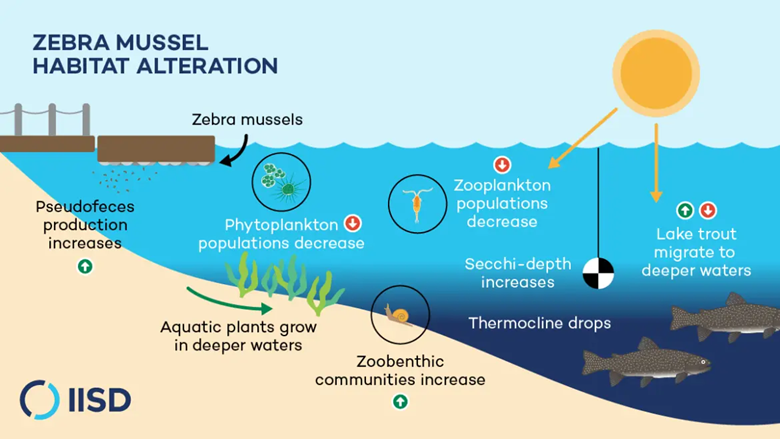
How Zebra Mussels alter a lake ecosystem: by filtering out phytoplankton they trigger a cascade of changes shown here, from clearer water and deeper light penetration to shifts in where first like trout can find food.
Environmental Impacts
One of the most serious consequences of invasive species is the loss of biodiversity. Native ecosystems are built on long-standing relationships between species, where each plays a role in maintaining balance. Invasive species disrupt these relationships, they may prey on native species, introduce diseases, or compete more effectively for resources. In some cases, invasive species can completely transform ecosystems by changing soil chemistry, water availability, or even fire patterns. Over time, these disruptions can lead to population declines or extinctions of native species.
Economic Consequences
The financial burden of invasive species is immense and continues to grow worldwide. Industries that rely on natural resources are particularly affected:
- Agriculture: Invasive pests can damage crops and reduce yields.
- Forestry: Tree-killing insects and diseases can devastate timber resources.
- Fisheries: Aquatic invaders disrupt food webs and impact fish populations.
- Infrastructure: Species like mussels can clog pipes and damage equipment, leading to costly maintenance.
Globally, invasive species are estimated to cost more than $400 billion each year in damages and control efforts, and that figure has climbed as global trade and travel have expanded — making prevention and early detection far cheaper than the alternative.
Social and Recreational Impacts
Beyond environmental and economic effects, invasive species can alter everyday experiences. Natural areas may become less accessible or enjoyable when overrun by invasive plants or animals. Waterways can become difficult to navigate, and declining wildlife populations can affect recreational activities like fishing, hiking, and birdwatching. In some cases, invasive species can even pose risks to human health through allergens, toxins, or disease transmission.
Why Invasive Species Spread So Easily
Several factors contribute to the rapid spread of invasive species:
- Global Trade and Travel: Goods and people move around the world more than ever, often carrying organisms unintentionally — Zebra Mussels and the Emerald Ash Borer both likely arrived this way, in ballast water and packing material respectively.
- Climate Compatibility: Many invasive species thrive in environments similar to their native habitats, and a warming climate is expanding the range where some can survive.
- Lack of Natural Predators: Without predators or competitors, populations can grow unchecked, as seen with Kudzu’s unchecked spread across the southeastern U.S.
- Human Activity: Landscaping, pet releases, and improper disposal of materials can introduce species into new areas — Asian Carp spread into the Mississippi River system this way, escaping fish farms during flooding.
What Can Be Done?
Addressing a problem of this scale takes action at both the individual and institutional level.
Individuals can help by:
- Cleaning Equipment: Outdoor gear, boats, and vehicles should be cleaned to prevent transporting organisms between waterways or regions.
- Using Native Plants: Choosing native species for landscaping helps support local ecosystems and avoids introducing the next Kudzu.
- Reporting Sightings: Early detection allows for faster response and better chances of control.
At a larger scale, governments and organizations work to prevent and manage invasions through:
- Border and Trade Inspections: Screening imported goods, plants, and ballast water to catch species before they establish.
- Biological and Chemical Control Research: Developing targeted treatments, such as parasitic wasps used against the Emerald Ash Borer, to control invasive populations without harming native species.
- Policy and Funding: Regulations on the pet trade, landscaping industry, and interstate transport, backed by public funding for monitoring and rapid response.
The International Union for Conservation of Nature (IUCN) coordinates much of this work globally — maintaining a database of invasive species, assessing which pose the greatest threat, and advising governments on prevention and control strategies.
Looking Ahead
Invasive species are not confined to one region—they are a global challenge that affects ecosystems everywhere. As environmental conditions shift and global connectivity increases, the risk of new invasions continues to rise.
By understanding the issue and taking proactive steps, individuals and communities can play a meaningful role in protecting biodiversity and preserving the natural balance of ecosystems worldwide.
For more information on Michigan’s invasive species check out the Watch List