
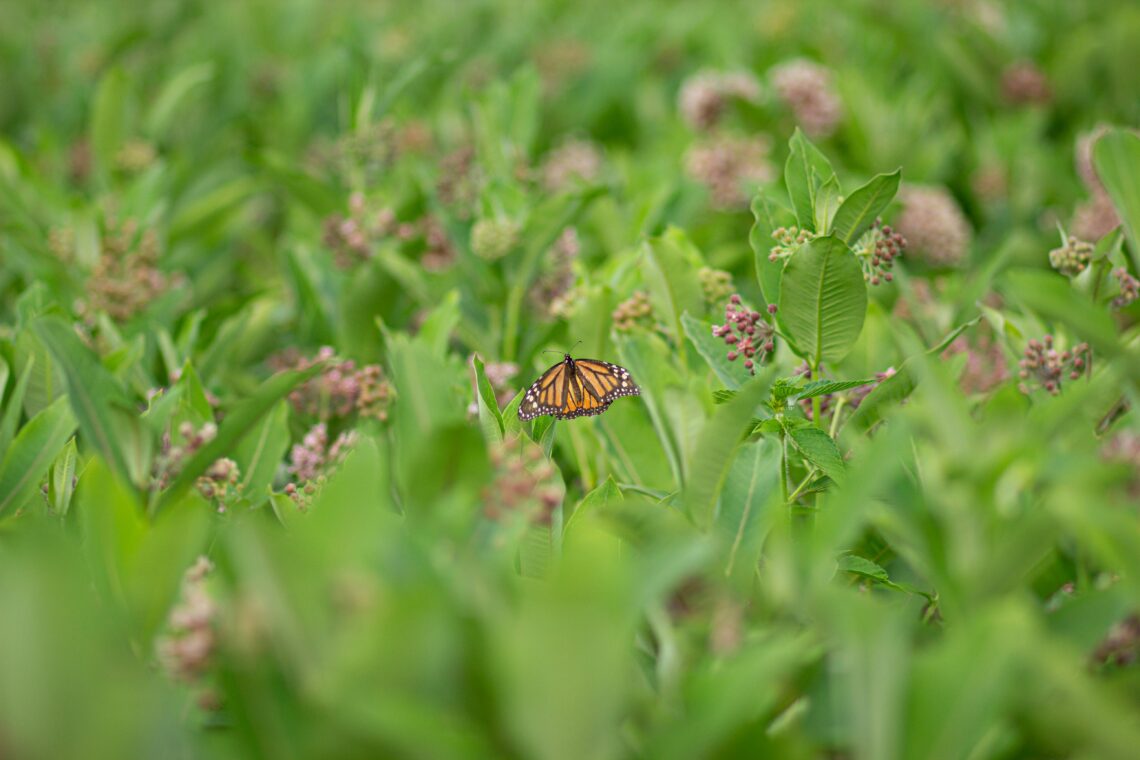
Mighty Monarchs: The Journey of Monarch Butterflies
Every year, millions of monarch butterflies make one of the most extraordinary migrations. Traveling thousands of miles across North America, these delicate insects depend on a network of habitats along their journey. One way individuals can help is by creating a monarch waystation—a garden designed specifically to support monarch butterflies with food, shelter, and breeding habitat.
What Is a Monarch Waystation?
A monarch waystation is a habitat area planted with milkweed and nectar-producing plants that provide the resources monarch butterflies need to survive and reproduce during migration. These spaces function like rest stops along a highway, allowing butterflies to feed, lay eggs, and continue their journey.
Milkweed is the most important plant in a waystation because it serves as the only host plant for monarch caterpillars. Adult monarchs lay their eggs on milkweed, and the caterpillars feed exclusively on their leaves. In addition to milkweed, monarch waystations include nectar-rich flowers that provide energy for adult butterflies during breeding and migration.
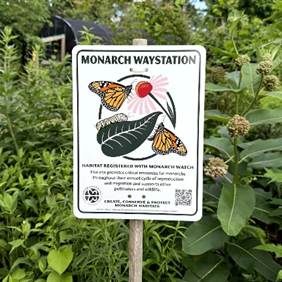
A registered Monarch Waystation sign. Posting signs at the monarch gardens helps inform passersby that the space is protected habitat and spreads awareness of why it matters.
The Monarch Migration
Monarch butterflies are famous for their remarkable annual migration. In eastern North America, monarchs travel up to 3,000 miles from breeding areas in the United States and Canada to overwintering forests in central Mexico.
Migration occurs in several stages:
Spring and early summer: Monarchs move north from Mexico and begin laying eggs on milkweed plants.
Summer: Multiple generations are born and continue moving northward as milkweed becomes available.
Late summer and fall: A special “super generation” emerges and begins the long migration back to Mexico.
Winter: Monarchs cluster together in forest habitats to survive the colder months before returning north again in spring.
The super generation is what makes monarch migration so remarkable: unlike the two-to-six-week lifespan of summer monarchs, this generation can live six to eight months, long enough to complete the entire flight to Mexico, overwinter, and begin the return trip north. Shortening day length and cooling temperatures in late summer trigger this generation to delay reproduction and redirect its energy into building fat reserves for the journey instead.
During this journey, monarchs may travel around 50 miles per day, relying on nectar-rich flowers and milkweed habitats along the way. Because habitat loss and pesticide use have reduced milkweed and nectar sources across North America, creating backyard waystations has become an important conservation effort.
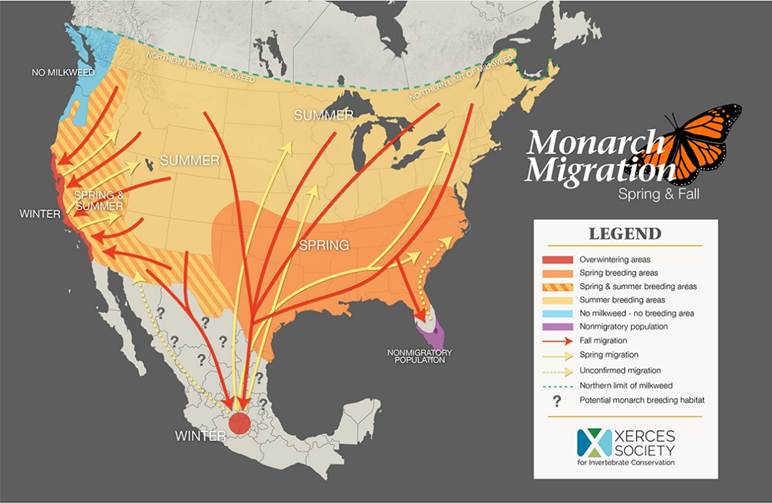
Eastern and western monarch migration routes and seasonal ranges across North America. (Map: Xerces Society for Invertebrate Conservation)
Monarch-Friendly Plants
A successful monarch waystation includes two main types of plants: host plants and nectar plants.
1. Milkweed (Host Plants)
Milkweed is essential because monarch caterpillars can only survive on these plants. Planting several milkweed plants together increases the chance that migrating monarchs will find them and lay eggs.
Not all milkweed is created equal, though. Choose milkweed species native to your region rather than tropical milkweed (Asclepias curassavica), which is widely sold at nurseries but doesn’t die back in winter in warmer climates. That can encourage monarchs to breed later than they should and has been linked to higher rates of a debilitating parasite, OE (Ophryocystis elektroscirrha). Your regional native plant society or extension office can point you to milkweed species suited to your area.
2. Nectar Plants (Food for Adult Butterflies)
Adult monarch butterflies feed on nectar from flowers to fuel flight and migration. Planting a variety of flowers that bloom throughout the growing season helps ensure a consistent food source. Late-season bloomers like asters and goldenrod are especially important because they provide energy for monarchs preparing for their fall migration.
How to Create a Monarch Waystation
Building a monarch waystation can be simple and scalable. Even a small garden can support monarch populations.
- Choose a sunny location: Most nectar plants and milkweed thrive in full sun, ideally six or more hours per day.
- Plant a mix of milkweed and nectar plants: Include several milkweed plants and a variety of flowering species that bloom from spring through fall.
- Avoid pesticides and herbicides: Chemicals can harm monarch eggs, caterpillars, and adult butterflies.
- Provide shelter and water: Dense plantings, shrubs, or grasses offer protection from wind and predators. Shallow water sources can also help support pollinators.
- Plant native species: Native plants are better adapted to local climates and provide the best resources for native pollinators.
- Consider registering your garden: Once your waystation meets Monarch Watch’s size and plant-count minimums, you can register it for official certification and a sign.
Why Monarch Waystations Matter
Monarch populations have declined sharply in recent decades due to habitat loss, pesticide use, and climate change. The eastern population that overwinters in Mexico has declined by roughly 80% since the 1990s, and the western population that overwinters along the California coast has declined by more than 95% since the 1980s. Large areas of milkweed habitat have disappeared as land is developed or converted to agriculture.
By creating monarch waystations in backyards, schools, parks, and community spaces, individuals can help rebuild a network of habitats that supports monarch reproduction and migration. These gardens don’t just benefit monarch butterflies — they also support bees, other pollinators, birds, and healthy ecosystems.
Learn more about Monarch Migration, or visit Monarch Watch to register your own waystation.